The Current Composition of the British Royal Family’s Net Worth

Net worth of the british royal family – The British royal family is one of the wealthiest and most influential families in the world. With a history dating back over a thousand years, the family’s net worth is estimated to be in the tens of billions of dollars. In this article, we’ll delve into the current composition of the British royal family’s net worth, exploring the individual contributions of each family member and the diverse revenue streams that contribute to their wealth.
The Combined Net Worth of the British Royal Family
According to estimates, the combined net worth of the British royal family is approximately $88 billion USD. This staggering figure is a result of a combination of individual family members’ wealth, as well as the sovereign wealth of the Crown Estate.
- Queen Elizabeth II’s Net Worth: The Queen’s net worth is estimated to be around $600 million USD, primarily due to her personal wealth and investments.
- King Charles’s Net Worth: King Charles’s net worth is estimated to be around $400 million USD, primarily due to his inheritance from his mother and his own investments.
- The Prince of Wales’s Net Worth: Prince William’s net worth is estimated to be around $300 million USD, primarily due to his inheritance from his parents and his own investments.
- The Duke and Duchess of Cambridge’s Net Worth: Prince William and Kate’s net worth is estimated to be around $200 million USD, primarily due to their royal allowances and investments.
- The Duke and Duchess of Sussex’s Net Worth: Prince Harry and Meghan’s net worth is estimated to be around $150 million USD, primarily due to their royal allowances and investments.
The Crown Estate is another significant contributor to the royal family’s net worth. The Crown Estate is a portfolio of properties and investments that belong to the monarch, but are managed by a team of experts. The Estate’s annual revenue is estimated to be around $400 million USD, which is distributed among the royal family.
Diverse Revenue Streams
The British royal family’s net worth is generated from a variety of sources, including:
- Property: The royal family owns a significant portfolio of properties, including castles, mansions, and private residences. These properties are rented out to generate income.
- Investments: The royal family has a diverse portfolio of investments, including stocks, bonds, and real estate investment trusts.
- Annual Allowances: The royal family receives annual allowances from the public purse, which are used to cover their living expenses and charitable donations.
Comparison with Other Wealthy Dynasties
The British royal family’s net worth is dwarfed by other wealthy dynasties around the world. For example:
The Saudi royal family’s net worth is estimated to be around $1.4 trillion USD, primarily due to the country’s vast oil reserves and investments.
The royal family of Thailand’s net worth is estimated to be around $30 billion USD, primarily due to the country’s wealthy business leaders and investments.
The royal family of Jordan’s net worth is estimated to be around $20 billion USD, primarily due to the country’s oil reserves and investments.
In conclusion, the British royal family’s net worth is a complex and multifaceted topic, with a range of revenue streams and individual contributors. While the family’s net worth is significant, it is dwarfed by other wealthy dynasties around the world.
Sources of Income for the British Royal Family: Net Worth Of The British Royal Family

The British royal family’s income is generated from a combination of official funding, business ventures, and philanthropic efforts. The Sovereign Grant, provided by the British government, is the primary source of financing for the royal family’s official duties and operations. However, the family also relies on various other sources of income to supplement their expenses and pursue charitable endeavors.
The Sovereign Grant: Official Funding, Net worth of the british royal family
The Sovereign Grant is an annual payment made by the British government to support the royal family’s official duties and expenses. The grant is based on the profit generated by the Crown Estate, a portfolio of properties and assets owned by the monarch but managed by a board of trustees. In 2023, the Sovereign Grant amount was £85.9 million, up from £82.2 million in 2022.
- The Sovereign Grant covers official expenses such as staff salaries, travel, and maintenance of royal palaces.
- The grant also supports the royal family’s charitable efforts, including funding for patronages and charitable organizations.
- However, the grant does not cover private expenses, such as family vacations or personal spending.
Property Sales: A Lucrative Source of Income
The British royal family has a significant portfolio of properties, including palaces, estates, and other real estate holdings. The sale of these properties is a substantial source of income for the family. In recent years, the royal family has generated significant revenue from the sale of various properties, including the sale of the Duke and Duchess of Gloucester’s London home for £18 million in 2020.
| Property | Sale Price |
|---|---|
| Highgrove House | £17 million |
| The Duke and Duchess of Gloucester’s London home | £18 million |
| An estate in Norfolk | £3.5 million |
Royal Art and Antiques: A Lucrative Business Venture
The British royal family has an extensive collection of art and antiques, which are occasionally sold to generate revenue. In 2019, the Queen’s former chef, Darren McGrady, revealed that the royal family had sold several valuable art pieces, including a rare portrait of Queen Elizabeth I, for £10 million.
- The sale of royal art and antiques is often handled by reputable auction houses, including Christie’s and Sotheby’s.
- The proceeds from the sale of these items are used to support the royal family’s charitable endeavors and official activities.
- However, the sale of royal art and antiques can also raise sensitive questions about the ownership and provenance of these items.
Licensing of Royal Brand Logos: A Growing Industry
The British royal family has a range of brand logos and emblems that are licensed to companies and organizations around the world. The licensing of these logos is a significant source of income for the royal family, generating millions of pounds each year. In 2020, it was reported that the Prince of Wales’s logo was being licensed to 40 companies in Australia alone.
- The licensing of royal brand logos is regulated by the Queen’s personal representative, who ensures that the logos are used responsibly and in accordance with royal protocol.
- The revenue generated from the licensing of these logos is used to support the Prince of Wales’s charitable and conservation efforts.
- However, the licensing of royal logos can also raise concerns about commercialization and the blurring of boundaries between official and private activities.
Philanthropic Focus: Education, Healthcare, and the Environment
The British royal family places a strong emphasis on philanthropic efforts, supporting a wide range of charitable causes and organizations. The family’s charitable work is focused on areas such as education, healthcare, and the environment. In 2020, the Princess Royal announced a new partnership with the World Wildlife Fund to support conservation efforts around the world.
- The Princess Royal has been a long-time supporter of the World Wildlife Fund, and the partnership aims to protect and conserve threatened and endangered species.
- The partnership will also support conservation efforts in various countries, including the UK, Africa, and Asia.
- However, the partnership has also raised questions about the role of philanthropy in supporting conservation efforts and the effectiveness of charitable partnerships in achieving long-term change.
Financial Implications of Royal Events
Royal events, such as weddings, funerals, and state visits, can have significant financial implications for the British royal family. These events often require substantial funding, which can be generated through ticket sales, sponsorship, and other revenue streams. However, the financial implications of royal events can also be significant, with some events requiring millions of pounds to stage.
- The 2018 wedding of Prince Harry and Meghan Markle is estimated to have cost £32 million.
- The 2020 funeral of Prince Philip, Duke of Edinburgh, was estimated to have cost £10 million.
- The costs of royal events can also vary greatly depending on the scale and scope of the event.
Key Areas of Philanthropic Focus
The British royal family places a strong emphasis on philanthropic efforts, supporting a wide range of charitable causes and organizations. The family’s charitable work is focused on areas such as education, healthcare, and the environment. In 2020, the Princess Royal announced a new partnership with the World Wildlife Fund to support conservation efforts around the world.
- The Princess Royal has been a long-time supporter of the World Wildlife Fund, and the partnership aims to protect and conserve threatened and endangered species.
- The partnership will also support conservation efforts in various countries, including the UK, Africa, and Asia.
- However, the partnership has also raised questions about the role of philanthropy in supporting conservation efforts and the effectiveness of charitable partnerships in achieving long-term change.
The British royal family’s philanthropic efforts are a significant part of their official duties and responsibilities. However, these efforts can also raise complex questions about the role of the monarchy in charitable work and the effectiveness of these efforts in achieving long-term change.
The Role of Royal Family Members in Wealth Accumulation
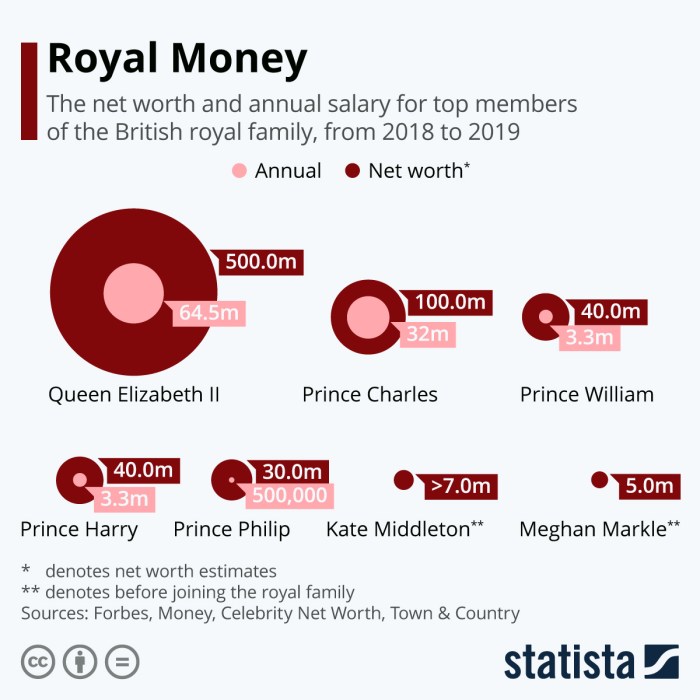
The British royal family’s vast wealth can be attributed to a complex interplay of factors, including inheritance, marriages, business ventures, and diplomatic missions. Among these, individual royal family members play a significant role in accumulating wealth through their unique endeavors and investments. This wealth, in turn, not only enhances their personal financial security but also reinforces the institution of the monarchy and supports the family’s charitable endeavors.Inheritance, for instance, is a primary factor in the accumulation of wealth among royal family members.
The British monarch, as the head of the Commonwealth, holds significant land and property assets that pass down through generations. This inherited wealth serves as a foundation for subsequent investments and business ventures, often pursued by younger royal family members. A prime example is Prince Charles’s vast Duchy of Cornwall estate, which generates substantial income through agricultural and commercial activities.Similarly, marriages have played a pivotal role in securing wealth and influential connections for royal family members.
The strategic union of Queen Elizabeth II and Prince Philip in 1947, for instance, strengthened the royal family’s ties with European royal families and secured their position within the British establishment. Today, royal family members like Prince William and Catherine, the Duke and Duchess of Cambridge, have leveraged their high-profile marriages to build a personal brand and secure lucrative endorsement deals.Beyond inheritance and marriages, entrepreneurial ventures have become increasingly prominent in the wealth accumulation strategies of royal family members.
Prince William, for example, has invested in various businesses, including a luxury tour company and a mental health charity. His wife, Catherine, has supported initiatives like the Hold Still project, which highlighted the impact of the COVID-19 pandemic on British communities.The significance of royal titles, honors, and diplomatic missions in generating revenue and promoting global influence cannot be overstated. By engaging in official trips, state visits, and other diplomatic endeavors, royal family members establish connections with global leaders and entrepreneurs, often leading to lucrative business opportunities.
The Prince of Wales, for instance, has been instrumental in promoting sustainable business practices and has invested in various eco-friendly ventures.
Entrepreneurial Ventures by Royal Family Members
Royal family members have launched numerous entrepreneurial ventures, ranging from luxury brands to environmental initiatives. While some have been successful, others have faced challenges and criticisms. Let’s examine a few notable examples:
- Prince William’s Private Office: This venture, launched in 2017, aimed to provide bespoke support services to entrepreneurs and businesses. Despite initial enthusiasm, the venture reportedly struggled to attract significant investment.
- The Royal Foundation: In 2009, Prince William, Kate Middleton, and Prince Harry founded the Royal Foundation to support charitable endeavors. The organization has since become a prominent force in promoting mental health awareness and community development.
- Catherine, the Duchess of Cambridge, has invested in various business ventures, including a clothing line and a children’s book. While these endeavors have generated interest, they have largely flown under the radar.
Strategies for Weealth Accumulation
Each royal family member adopts a unique approach to wealth accumulation, often reflecting their individual interests and skills. Let’s examine a few notable strategies:
- Inheritance and Strategic Involvement: Prince Charles, for instance, has strategically managed the Duchy of Cornwall estate to ensure its continued growth and profitability.
- Marriage and Social Connections: Prince William and Kate Middleton’s marriage has strengthened their position within the British establishment and opened up new opportunities for business ventures and charitable partnerships.
- Environmental and Social Initiatives: The Prince of Wales has championed eco-friendly business practices and invested in sustainable ventures, reflecting his commitment to environmental stewardship.
Taxation, Transparency, and Public Perception of Royal Family Finances
The British royal family’s finances have long been shrouded in mystery, with many questioning the fairness and transparency of their taxation and financial dealings. At the heart of this issue is the Sovereign Grant, a annual funding provided by the British government to support the royal family’s official activities. However, the grant’s terms and conditions have been criticized for providing tax exemptions to the queen and other royal family members, sparking controversy and debate.
Tax Laws and Exemptions
The royal family’s tax obligations are governed by a complex web of laws and regulations. The Sovereign Grant is exempt from income tax, capital gains tax, and value-added tax (VAT), which means that the queen and other royal family members do not have to pay taxes on the grant’s income. However, this exemption has led to criticisms that the royal family is receiving special treatment and that the grant is essentially a tax-free allowance.
Controversies and Debates
There have been numerous controversies surrounding the royal family’s finances, including debates over taxation and allegations of financial impropriety. One notable example is the controversy surrounding the queen’s income tax exemption. In 2002, the Sunday Telegraph reported that the queen had paid an estimated £20 million in taxes over the previous 20 years, despite having an income of over £100 million.
This sparked a public outcry and fueled calls for greater transparency in the royal family’s finances.
The Importance of Transparency
Transparency in the royal family’s finances is essential for maintaining public trust and confidence. Regularly published annual reports and budgets can help to provide a clearer picture of the royal family’s financial dealings and demonstrate accountability. The royal family’s charitable activities, for example, are subject to scrutiny and evaluation, which helps to ensure that their philanthropic efforts are effective and impactful.
Sources of Income and Tax Obligations
Despite being exempt from tax on the Sovereign Grant, the royal family still generates significant income from other sources, including investments, property sales, and commercial activities. Some of these sources of income may be subject to tax, while others may not.
| Source of Income | Exempt from Tax? | Comments |
|---|---|---|
| Sovereign Grant | Yes | Exempt from income tax, capital gains tax, and VAT |
| Investments | No | Subject to income tax and capital gains tax |
| Property Sales | No | Subject to capital gains tax and VAT |
| Commercial Activities | No | Subject to income tax, capital gains tax, and VAT |
Annual Reports and Budgets
The royal family’s annual reports and budgets provide a valuable resource for understanding their financial dealings and demonstrating accountability. The reports detail their income, expenses, and charitable activities, among other information. The budgets, on the other hand, Artikel the royal family’s spending plans and priorities for the coming year.
According to the 2022 annual report, the royal family’s net worth is estimated to be around £500 million.
Public Perception and Trust
The royal family’s financial dealings have a significant impact on public perception and trust. Greater transparency and accountability can help to build confidence in the royal family’s financial management and maintain public support. The benefits of transparency are multifaceted, including:*
- Greater public trust and confidence
- Improved accountability and oversight
- Enhanced credibility and reputation
- Increased transparency and understanding
The royal family’s financial dealings have far-reaching implications for public trust and confidence. By prioritizing transparency and accountability, the royal family can maintain public support and build a stronger relationship with the British public.
End of Discussion
The net worth of the British royal family is a fascinating topic that offers a glimpse into the lives of some of the wealthiest individuals in the world. As we have explored in this article, their wealth and influence are the result of a complex interplay of historical events, royal scandals, and business ventures. As we look to the future, it will be interesting to see how the royal family continues to shape their philanthropic efforts and business ventures to maintain their wealth and influence.
Clarifying Questions
Q: What is the estimated net worth of the British royal family?
The estimated net worth of the British royal family is around £100-150 billion (approximately $130-195 billion USD), although this figure can vary depending on the source and the methodology used.
Q: How do the British royal family’s investments contribute to their net worth?
The British royal family’s investments include a wide range of assets, such as property, stocks, and bonds, as well as business ventures in areas like tourism, real estate, and finance.
Q: What role do royal titles and honors play in generating revenue for the royal family?
Royal titles and honors can generate significant revenue for the royal family through licensing fees, merchandising, and other sources.
