Muammar Gaddafi’s Business Empire: A Diversified Portfolio: Muammar Gaddafi Net Worth 2024
Muammar gaddafi net worth 2024 – Muammar Gaddafi, the former Libyan leader, was known for his ambitious business ventures, which played a significant role in shaping Libya’s economy and global market trends. His business empire, though not without controversy, was a diverse and complex entity that spanned various sectors, from oil and gas to finance, construction, and even telecommunications. In this section, we will delve into the different sectors of Gaddafi’s business ventures, exploring their profitability, successes, and failures.
Oil and Gas Sector: The Backbone of Libya’s Economy
The oil and gas sector was the primary driver of Libya’s economy during Gaddafi’s rule. The country was richly endowed with hydrocarbon resources, and Gaddafi’s regime made significant investments in exploring and developing these resources. The National Oil Corporation (NOC), a state-owned enterprise, played a crucial role in managing Libya’s oil and gas reserves. Under Gaddafi’s leadership, the NOC expanded its operations, increasing crude oil production from around 2.5 million barrels per day in 2005 to over 3.2 million barrels per day by 2010.The oil and gas sector was a significant source of revenue for Libya, generating billions of dollars in exports each year.
However, the sector was not without its challenges. The NOC faced criticism for its inefficiencies, corruption, and lack of transparency. The sector’s profitability was also heavily dependent on global oil prices, which fluctuated significantly during Gaddafi’s rule.
Non-Oil Sectors: A Diverse Portfolio of Investments
Gaddafi’s business empire extended far beyond the oil and gas sector. He invested in a range of non-oil sectors, including finance, construction, and telecommunications. The Libyan Investment Authority (LIA), a sovereign wealth fund established in 2006, played a key role in managing these investments.One notable example of Gaddafi’s investments in the non-oil sector is the Libyan European Investment Bank (LEIB).
Established in 2009, the LEIB was a joint venture between the LIA and the European Investment Bank (EIB). The LEIB’s primary objective was to invest in projects that promoted economic growth, social development, and environmental sustainability in Libya.[h2] table 1: Selected Non-Oil Investments of Gaddafi’s Business Empire| Sector | Company/Project | Investment Amount || — | — | — || Finance | Libyan European Investment Bank (LEIB) | €1.5 billion || Construction | GECOL (Libyan General Electricity Company) | $1.2 billion || Telecommunications | LPTIC (Libyan Post, Telecommunications and Information Technology Company) | $500 million |[h3] Impact on Libya’s Economy and Global Market TrendsGaddafi’s business empire had a significant impact on Libya’s economy and global market trends.
His investments in the oil and gas sector generated billions of dollars in revenue each year, contributing to Libya’s rapid economic growth. However, the sector’s profitability was heavily dependent on global oil prices, which made it vulnerable to fluctuations in the global market.The non-oil sectors also contributed to Libya’s economic growth, with investments in finance, construction, and telecommunications promoting economic development and social progress.
However, these sectors faced significant challenges, including corruption, inefficiencies, and lack of transparency.In conclusion, Muammar Gaddafi’s business empire was a complex and diversified entity that spanned various sectors. While the oil and gas sector was the primary driver of Libya’s economy, the non-oil sectors also contributed significantly to the country’s economic growth. However, both sectors faced significant challenges, including corruption, inefficiencies, and lack of transparency.
Gaddafi’s Luxury Assets: A Glimpse into his Lavish Lifestyle

Muammar Gaddafi, the former Libyan leader, was infamous for his extravagant lifestyle and penchant for luxury goods. His taste for the finer things in life was a hallmark of his rule, and his estate was a testament to his wealth and power.
Magnitude of his Assets
Gaddafi’s luxury assets were a reflection of his status as a global leader. He had an estimated $200 billion in assets, accumulated through a combination of oil wealth, business ventures, and international investments. A significant portion of these assets was invested in real estate, high-end vehicles, artwork, and other luxury items.
Table of Notable Luxury Assets
| Category | Asset | Estimated Value | Location |
|---|---|---|---|
| Properties | Compound in Benghazi | $10 million | Benghazi, Libya |
| Properties | Villa in Tripoli | $30 million | Tripoli, Libya |
| Vehicles | 2010 Mercedes-Benz S-Class | $100,000 | Various locations |
| Artwork | Picasso’s “Les Femmes d’Alger” | $100 million | Tripoli, Libya |
Reasons Behind Gaddafi’s Preference for Luxury Goods and Assets
Gaddafi’s affinity for luxury goods and assets was deeply rooted in his cultural background and personal preferences. As the leader of a vast oil-rich nation, he was accustomed to a life of opulence and privilege. His love for luxury items was a reflection of his desire to showcase his power and status as a world leader.Gaddafi’s fascination with high-end art and collectibles was also a result of his fascination with Western culture.
He had a particular fondness for the work of European masters, including Picasso and Van Gogh. His art collection, which included works by some of the world’s most famous artists, was a testament to his taste and refinement.Moreover, Gaddafi’s penchant for luxury vehicles was a symbol of his desire for speed, power, and prestige. He owned a vast collection of high-end cars, including rare and exotic models from around the world.Overall, Gaddafi’s luxury assets were a reflection of his status as a global leader and his desire to showcase his wealth and power.
His estate, which included a vast collection of properties, artwork, and high-end vehicles, was a testament to his taste and refinement.
Cultural and Personal Motivations
Gaddafi’s love for luxury goods and assets was also influenced by his cultural background and personal preferences. As a member of a wealthy Libyan family, he was accustomed to a life of luxury and privilege from a young age.Gaddafi’s fascination with Western culture was also a result of his desire to connect with the international community. He believed that embracing Western culture was a way to demonstrate his commitment to modernity and progress.Moreover, Gaddafi’s love for luxury items was also a reflection of his desire for prestige and status.
He believed that owning high-end goods and assets was a way to project power and authority, and to showcase his status as a world leader.In conclusion, Gaddafi’s luxury assets were a reflection of his status as a global leader and his desire to showcase his wealth and power. His estate, which included a vast collection of properties, artwork, and high-end vehicles, was a testament to his taste and refinement.
Controversies and Criticisms Surrounding Gaddafi’s Net Worth

Muammar Gaddafi’s net worth has been a subject of intense scrutiny and debate, with various estimates suggesting a staggering amount of wealth accumulated during his reign. However, beneath the surface of these estimates lies a complex web of accusations and controversies that have raised questions about the legitimacy and morality of Gaddafi’s wealth acquisition.One of the primary criticisms leveled against Gaddafi is that his wealth was built on corruption and exploitation of Libya’s natural resources.
Critics argue that Gaddafi’s regime used its control over the country’s oil reserves to accumulate vast sums of money, much of which was then laundered and invested in luxury assets around the world.
Accusations of Corruption and Money Laundering
The 2011 Arab Spring protests that led to Gaddafi’s ouster were largely fueled by widespread discontent with his regime’s corruption and human rights abuses. One of the key allegations made against Gaddafi was that he had used his position to accumulate vast sums of money, which he then laundered through a complex network of shell companies and offshore bank accounts.For example, a 2011 report by the Financial Times estimated that Gaddafi had stashed away as much as $200 billion in foreign bank accounts and investments.
This estimate was based on data from various sources, including the US Treasury Department’s Financial Crimes Enforcement Network (FinCEN) and the UK’s Serious Fraud Office.
Disparities in Net Worth Estimates
Estimates of Gaddafi’s net worth have varied wildly over the years, with some sources suggesting that he accumulated as much as $300 billion during his reign. However, other estimates have been significantly lower, ranging from $100 billion to $200 billion.A 2013 report by the investigative journalism organization, The Bureau of Investigative Journalism, estimated that Gaddafi’s net worth was somewhere in the range of $150 billion to $200 billion.
However, this estimate was based on data from a limited number of sources and may not be entirely accurate.
Impact on Legacy and Public Perception
The controversies surrounding Gaddafi’s net worth have had a profound impact on his legacy and public perception of his rule. Many Libyans view Gaddafi’s wealth as a symbol of his corruption and exploitation, and see his ouster as a necessary step towards restoring dignity and stability to their country.In 2018, a report by the International Crisis Group estimated that Libya’s economic losses as a result of Gaddafi’s regime were in the range of $100 billion to $150 billion.
This estimate was based on data from various sources, including the World Bank and the UN Development Programme.In conclusion, the net worth of Muammar Gaddafi is a highly contentious issue that has sparked intense debate and controversy. While estimates of his wealth vary widely, the majority of experts agree that he accumulated vast sums of money during his reign, much of which was built on corruption and exploitation of Libya’s natural resources.Gaddafi’s legacy is now forever tarnished by accusations of corruption and human rights abuses, and his net worth serves as a stark reminder of the consequences of his actions.
As Libya continues to rebuild and recover from the devastation of Gaddafi’s regime, it is crucial that his successors prioritize transparency and accountability in their management of the country’s resources.
The Economic Legacy of Gaddafi’s Authoritarian Rule
Muammar Gaddafi’s rule in Libya, spanning over four decades, was marked by a unique blend of authoritarianism and economic experimentation. While his policies and initiatives had a significant impact on the country’s economy, their legacy is complex and multifaceted. In this section, we will delve into the economic policies and initiatives introduced by Gaddafi to stimulate growth and diversify Libya’s economy.Gaddafi’s vision for Libya’s economy was centered around creating a socialist-oriented, state-led economy.
He aimed to reduce the country’s dependence on oil exports, which at the time accounted for over 95% of the country’s revenue. To achieve this, Gaddafi introduced a series of initiatives and policies aimed at promoting economic diversification and growth. One of the most notable examples of these initiatives is the creation of the Libyan Investment and Development Company (LIDCO) in 1971.
Libyan Investment and Development Company (LIDCO), Muammar gaddafi net worth 2024
Established in 1971, LIDCO was a state-owned investment company responsible for investing in and promoting various sectors of the economy, including agriculture, manufacturing, and infrastructure development. The company played a crucial role in diversifying Libya’s economy and stimulating growth in non-oil sectors.
- LIDCO’s investments in the agriculture sector led to a significant increase in food production, reducing the country’s reliance on imported food items.
- The company’s initiatives in the manufacturing sector led to the establishment of new industries, such as textiles and pharmaceuticals, which created new employment opportunities and stimulated economic growth.
- LIDCO’s investments in infrastructure development, including transportation networks and public buildings, played a crucial role in modernizing Libya’s infrastructure and stimulating economic growth.
However, despite these successes, Gaddafi’s authoritarian rule had a significant impact on the development of Libya’s private sector and entrepreneurial culture. The government’s control over the economy and the lack of a clear framework for private sector development limited the growth of entrepreneurship and innovation.
Private Sector Development
Gaddafi’s authoritarian rule had a stifling effect on Libya’s private sector, which was often subject to arbitrary regulations and restrictions. The government’s control over the economy also limited the growth of entrepreneurship and innovation, as many private sector companies struggled to compete with state-owned enterprises.
Economic Initiatives and Programs
Despite these challenges, Gaddafi’s government launched several successful economic initiatives and programs aimed at stimulating growth and promoting economic development. Some notable examples include the following:
- The “Green Book” program, launched in the 1970s, aimed to reduce the country’s dependence on oil exports by promoting agricultural development and self-sufficiency.
- The “Great Man-Made River” project, launched in the 1980s, aimed to provide irrigation and drinking water to the country’s rural areas, stimulating economic growth and reducing poverty.
Last Recap
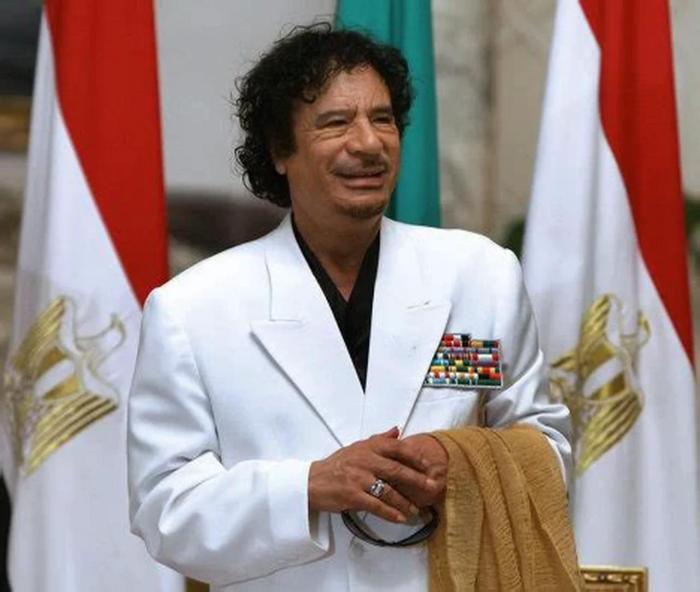
In conclusion, Muammar Gaddafi’s Net Worth 2024 is a testament to the power of vision and determination. From his earliest days as a young leader to his final days in exile, Gaddafi’s life was marked by a relentless pursuit of greatness. His legacy serves as a reminder that true success is not just about accumulating wealth, but about leaving a lasting impact on the world around us.
Query Resolution
What was Gaddafi’s primary source of income?
Gaddafi’s primary source of income was the oil industry, which was a key driver of Libya’s economy during his rule. He leveraged his control of the sector to accumulate vast wealth and influence.
How did Gaddafi’s business ventures impact Libya’s economy?
Gaddafi’s business ventures had a significant impact on Libya’s economy, both positive and negative. On the one hand, he invested in key infrastructure and industries, creating jobs and stimulating growth. On the other hand, his authoritarian rule and reliance on a single revenue stream made the economy vulnerable to external shocks.
What role did advisors and financial experts play in Gaddafi’s financial management?
Gaddafi relied heavily on advisors and financial experts to manage his vast wealth and investments. These individuals helped him navigate complex financial transactions and make informed decisions about his portfolio.
