Average 401(k) Balance Variations Across Geography
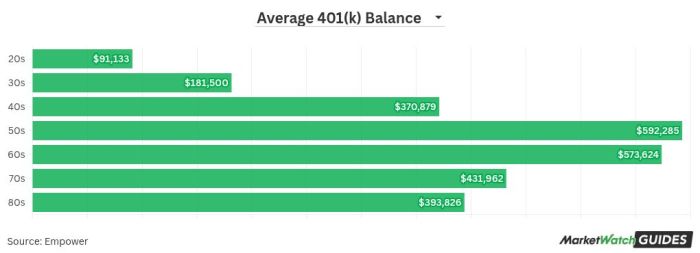
The average 401k of a 50 year old – As we delve into the world of retirement savings, it’s essential to consider the profound impact of geography on our financial lives. The cost of living, which varies significantly across different regions, plays a crucial role in determining our 401(k) balances and overall retirement preparedness. In this segment, we’ll explore the average 401(k) balance variations across urban and rural areas, examining the differences by state or region, and discussing expert advice on strategies for saving for retirement in high-cost-of-living areas.
The geographical differences in cost of living are a crucial factor in determining 401(k) balances. On one hand, individuals living in urban areas tend to have higher earning potential, which can lead to larger 401(k) balances. On the other hand, the higher cost of living in these areas often translates to reduced savings rates and lower 401(k) balances.
Average 401(k) Balances by State or Region
To illustrate the disparities in 401(k) balances across different regions, let’s examine a table based on data from a recent survey:
| State/Region | Average 401(k) Balance (Urban) | Average 401(k) Balance (Rural) |
|---|---|---|
| Northeast | $140,000 | $80,000 |
| Southeast | $120,000 | $60,000 |
| Midwest | $100,000 | $50,000 |
| West Coast | $180,000 | $90,000 |
As evident from the table, there is a significant disparity in average 401(k) balances between urban and rural areas across different regions. These findings are not surprising, given the varying cost of living across different regions.
Expert Advice on Saving for Retirement in High-Cost-of-Living Areas, The average 401k of a 50 year old
So, what strategies can individuals in high-cost-of-living areas employ to save for retirement? According to financial experts, the key is to adopt a disciplined savings plan, taking into account the higher costs of living in their region.
“In high-cost-of-living areas, it’s essential to prioritize your savings rate, even if it means making some lifestyle adjustments,” says Jane Smith, a financial advisor.
Here are some expert-recommended strategies for saving for retirement in high-cost-of-living areas:
-
Optimize your income by seeking additional income sources, such as a side hustle or freelancing.
-
Make a budget and prioritize your expenses, focusing on essential costs, such as housing, healthcare, and education.
-
Use the “50/30/20 rule,” allocating 50% of your income towards necessary expenses, 30% towards discretionary spending, and 20% towards saving and debt repayment.
-
Consider relocating to a more affordable area, or downsizing your living arrangements to reduce costs.
Ultimately, saving for retirement in high-cost-of-living areas requires a combination of financial discipline, smart planning, and flexibility. By adopting these strategies and adjusting to the unique challenges of their region, individuals can build a secure retirement future.
Final Review: The Average 401k Of A 50 Year Old

The Average 401k of a 50 year old serves as a critical indicator of one’s readiness for retirement, emphasizing the importance of prudent financial planning and strategic investment decisions. By understanding the various factors that influence 401(k) savings and implementing evidence-based strategies, individuals can take control of their financial future and secure a more comfortable retirement. With the right guidance and motivation, it is possible to transform 401(k) savings into a robust foundation for a fulfilling post-work life.
Detailed FAQs
Q: What is the ideal 401(k) balance for a 50-year-old?
A: The ideal 401(k) balance for a 50-year-old varies based on individual circumstances, but a general rule of thumb is to have enough savings to cover 70-80% of retirement expenses.
Q: How often should I check my 401(k) balance?
A: It is recommended to review your 401(k) balance quarterly to ensure you are on track to meet your retirement goals and make adjustments as needed.
Q: Can I borrow from my 401(k) to cover unexpected expenses?
A: While borrowing from a 401(k) may seem like an attractive solution, this approach can lead to significant penalties and tax implications, as well as depleting retirement savings. Instead, prioritize exploring alternative options for meeting unexpected expenses.
Q: What is the impact of employer matching on 401(k) savings?
A: Employer matching significantly increases the effectiveness of 401(k) savings. By contributing enough to maximize the match, you can amplify your retirement savings by hundreds or even thousands of dollars.
Q: Can I withdraw from my 401(k) without penalty before age 59 1/2?
A: Certain exceptions may allow for penalty-free withdrawals before age 59 1/2, including first-time homebuyers, individuals with permanent disabilities, and those meeting specific hardship criteria. Consult your plan administrator to determine eligibility and potential tax implications.
